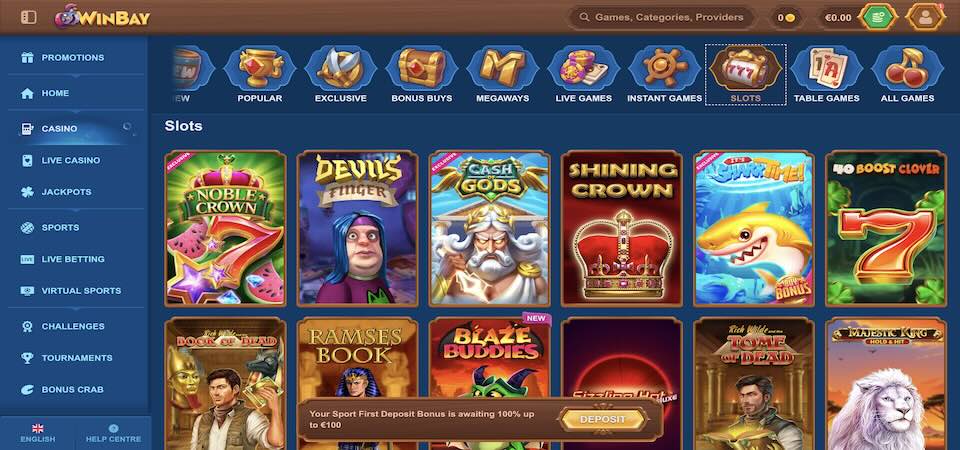

The ťuknite sem mobile app lets players to make deposits and withdrawals straight from their smartphones, with the equivalent payment options and security standards found on the desktop site. This guide describes how the app processes transactions, which payment methods are available, what limits and processing times are relevant, and how to resolve common issues without departing the mobile interface. Readers will learn the exact steps necessary to set up payments, how to confirm account details before the first deposit, and what to anticipate when requesting a withdrawal to a bank account or e-wallet. The following sections address device compatibility, installation, security settings, and performance considerations so that users can handle their funds confidently on any approved phone or tablet.
Speed, Updates, and Troubleshooting
App performance is monitored through an internal diagnostics tool reachable from the settings menu. The tool reports average frame rate, memory usage, and any dropped network packets during the current session. If frame rates dip beneath 30 fps for more than ten seconds, the app suggests closing background applications or lowering graphics quality in the game lobby. Update notifications display as a banner inside the app; tapping the banner triggers a delta download that typically is under 15 MB and keeps user settings and saved payment methods.
Common issues involve failed deposits due to expired cards and withdrawals delayed by bank holidays. The in-app help center lists these scenarios with step-by-step recovery instructions and estimated resolution times. If a transaction is unresolved beyond the stated window, players can start a live-chat ticket directly from the transaction detail screen; the chat agent obtains the transaction ID automatically, removing the need to copy numbers between screens. Persistent problems after a fresh install usually indicate a device-level restriction, such as aggressive battery-optimization settings that stop the app’s background processes, and the troubleshooting guide provides the exact menu path to whitelist the app on both Android and iOS.
Establishing Payment Methods Within the App
After logging in, users access the cashier by clicking the wallet icon at the bottom navigation bar. The first screen displays every payment method active for the player’s account, such as bank transfers, credit and debit cards, and several e-wallets. To register a new method, the user picks “Add Payment,” enters the required details, and confirms ownership through a micro-deposit verification or a one-time code delivered by SMS. The app stores encrypted tokens rather than full card numbers, so subsequent deposits need only the saved method and the desired amount.
Each saved method displays its processing time and any fees that Winbay or the provider may charge. For example, SEPA bank transfers usually arrive within one business day, while instant e-wallets post within minutes. The app also shows daily and monthly deposit limits associated with the player’s verification level; limits can be raised by completing additional identity checks directly in the app’s KYC section. Players who choose to keep multiple currencies can switch the displayed currency from the same menu, and the app recalculates fees and limits automatically based on the chosen currency.
Identity Checks Before First Withdrawal
Document Upload via Mobile Camera
Prior to any withdrawal is processed, the app demands identity verification. Users access the account menu, choose “Verification,” and choose the document type—national ID, passport, or driver’s licence. The camera interface launches with an overlay that helps the user to align the document edges; once both sides are recorded, the images are compressed and transferred over an encrypted connection. A second screen prompts for a selfie holding the same document, ensuring the face corresponds to the photo ID. Processing generally completes within twenty-four hours, and the app pushes a push notification when the status updates to “Verified.”
Players who encounter glare or shadow issues can retake photos immediately without restarting the entire flow. The app also accepts PDF scans saved in the phone’s files app; choosing this option skips the camera and uploads the existing file directly. If the verification team requests additional documents, such as a utility bill for address confirmation, the request appears in the same verification screen with a thirty-day deadline. Failure to provide requested documents within the window by default voids any pending withdrawal until verification is finished.
Security Features and Information Handling
The app enforces two-factor authentication at every login except when the user actively disables it in settings. A time-based one-time password from an authenticator app is recommended over SMS because it remains functional even when mobile signal is weak. Biometric login via fingerprint or face recognition is supported on supported hardware and can be switched independently of two-factor authentication. All payment data in transit is secured by TLS 1.3, and stored tokens are encrypted with AES-256 keys that rotate every ninety days.
Data consumption changes by activity. A typical deposit or withdrawal page loads approximately 180 KB, while live-dealer streams consume roughly 1.2 MB per minute at standard definition. Players can minimize usage by switching to Wi-Fi only in the app settings, which blocks mobile-data access for both gameplay and background balance checks. Session timeouts take place after fifteen minutes of inactivity, demanding re-authentication before any new payment can be initiated, thereby limiting exposure if the device is left unattended.
Funding and Payout Flow on Mobile
Deposits start when the player selects a saved payment method, types an amount within the displayed limits, and presses “Confirm.” The app then transfers control to the provider’s secure checkout page inside an in-app browser window, so banking credentials are never entered inside the casino interface. Upon successful authorization, the browser closes and the new balance appears in the wallet screen within seconds. A transaction receipt is stored automatically and can be checked later under “Transaction History.”
Cash-outs use a similar path but feature an extra confirmation step. After picking the amount and method, the app displays the expected arrival date and any applicable fee. The player must type a one-time code sent by SMS or generated by an authenticator app before the request is sent. Once submitted, the request changes to a “Pending” status visible in the history list. Players can withdraw a pending withdrawal only if it has not yet been handled by the finance team; after processing begins, cancellation is unavailable and the funds are dispatched according to the chosen method’s schedule.
Getting and Installing the App on iOS
iOS users get the Winbay Casino app through the Safari browser by accessing the official site and picking the iOS button. The site creates a configuration profile rather than a direct IPA file; after the profile finishes downloading, the user must go into the Settings app, tap “Profile Downloaded,” and select “Install.” A second prompt requests the device passcode, after which the Winbay icon appears on the home screen. Because the app is not made available through the Apple App Store, each new version needs the user to redo the profile-installation step, although the update itself is pushed automatically once the app is started on a Wi-Fi connection.
Enterprise provisioning on iOS ends after one year, so Winbay provides a new profile roughly eleven months after the previous one. Players are sent an in-app notification when the current profile is nearing expiration, together with a direct link to the updated profile. If the profile runs out before renewal, the app will fail to launch and present a message directing the user to reinstall from the website. Battery and storage impact are modest: the installed size is 92 MB, and background refresh is restricted to payment-status checks every fifteen minutes when the device is locked.
Supported Mobile Devices and OS Versions
Winbay Casino’s mobile app works on both Android and iOS devices, but the minimum operating-system versions differ between the two platforms. Android phones and tablets must have version 7.0 or newer, while iOS devices demand at least iOS 13. Devices older than these thresholds won’t get the installation file or will display a compatibility warning during the download process. Screen-size support commences at 5 inches for phones and 7 inches for tablets; smaller or larger displays are still usable, yet the interface elements may appear either cramped or sparsely spaced. RAM recommendations are 3 GB for smooth gameplay and 4 GB if players intend to keep multiple tables or slots open simultaneously. Users should also check that their device’s GPU handles OpenGL ES 3.0 or Metal, because certain live-dealer streams rely on hardware acceleration to maintain 60 frames per second.
Tablet users profit from an adaptive layout that reorganizes the lobby into a two-column grid, whereas phone users see a single-column scroll. Both layouts maintain the same payment buttons and account menus, so moving from phone to tablet does not necessitate relearning navigation. Landscape mode is available on all supported devices, but only tablets display an additional side panel for the transaction history while the game remains visible. Players who switch between devices will find that the app updates account balances and pending transactions in real time once they log in with the same credentials.
Installing and Configuring the App on Android
Android users are unable to obtain the Winbay Casino app from the Google Play Store because gambling applications are prohibited in that marketplace. Instead, the download begins on the official Winbay website by clicking the Android button, which triggers a file named winbay.apk. Before installation, users must open their device settings, head to security or privacy, and activate “Install from unknown sources” for the browser or file-manager app they are employing. Once the toggle is active, the downloaded file can be opened directly from the notification shade or the downloads folder. The installation wizard displays the required permissions—storage access for game assets and network access for payment processing—and requests the user to verify each one.
After the app icon appears on the home screen, the first launch starts an automatic integrity check that verifies the package signature against Winbay’s published checksum. If the check succeeds, the login screen appears; if it does not pass, the app displays an error and advises the user to re-download from the official site. Sideloading remains the only official method, so players should avoid third-party APK aggregators that may include malware or outdated builds. Storage space needed for the initial install is approximately 85 MB, with an additional 120 MB fetched on first launch for graphics and sound files. Users on limited data plans can move to Wi-Fi before pressing the install button to prevent unexpected mobile-data charges.